
White-papers collection dedicated to optimal-ageing : #4 Cognitive health
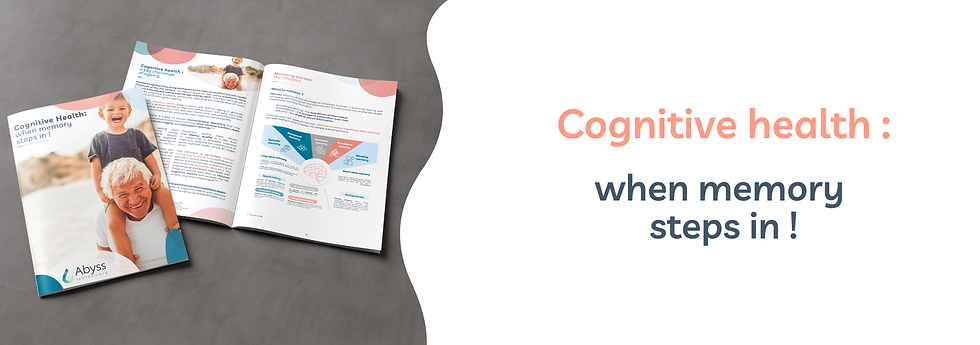
Discover our new white-paper dedicated to cognitive health !
Population ageing is now recognized as one of the major economic and public health challenges of the 21st century. The figures speak for themselves: worldwide, more than one billion people will be over the age of 60 by 2050 [1]. This major demographic shift raises important questions, particularly regarding the maintenance of health and quality of life throughout ageing.
In this context, cognitive health plays a central role. Normal ageing is generally associated with a gradual decline in cognitive performance, with early signs that may appear as early as the age of 45 [2]. Memory impairment, reduced attention, and difficulties with concentration are among the most common manifestations.
This cognitive decline is linked to various neurobiological alterations that may affect several key physiological functions, including sleep, immune function, stress regulation, gut microbiota integrity, and antioxidant defenses. [3],[4],[5]
However, cognitive ageing does not occur uniformly across individuals. While some people maintain relatively stable cognitive performance, others experience earlier and more pronounced decline.

These interindividual differences can be partly explained by the concept of cognitive trajectory, which refers to an individual’s level of cognitive reserve. This reserve is partly determined by genetic factors but is also shaped throughout life by environmental and behavioral influences. [6]
Among these factors, nutrition plays a particularly important role. [7] Numerous studies have shown that dietary quality is a key lever for supporting a favorable cognitive trajectory, meaning the maintenance of good cognitive health across all stages of life.
This influence is particularly critical during specific life periods, such as exam periods in young adults, the postpartum period and menopause in women, or in the context of metabolic disorders. The physiological processes associated with these situations may lead to reduced cognitive reserve and increase the risk of early cognitive impairment. [8],[9],[10]
From this perspective, the implementation of targeted preventive nutritional strategies appears essential. The objective is to preserve cognitive reserve and promote healthy brain ageing, thereby contributing to the maintenance of overall health and autonomy with age.

Références :
1- « World population ageing 2019 » report, UN. Population Division, 2020
2- Singh-Manoux et al., 2012
3- Franziska Kiene et al., 2025
4- Lina Ma, 2020
5 - F. Jessen et al., 2020
6 - Cabeza et al. 2018
7 - Yu et al. 2020
8 - Ramdani C. 2023
9 - Hahn-Holbrook J et al, 2017
10 - Dinel AL et al, 2011


